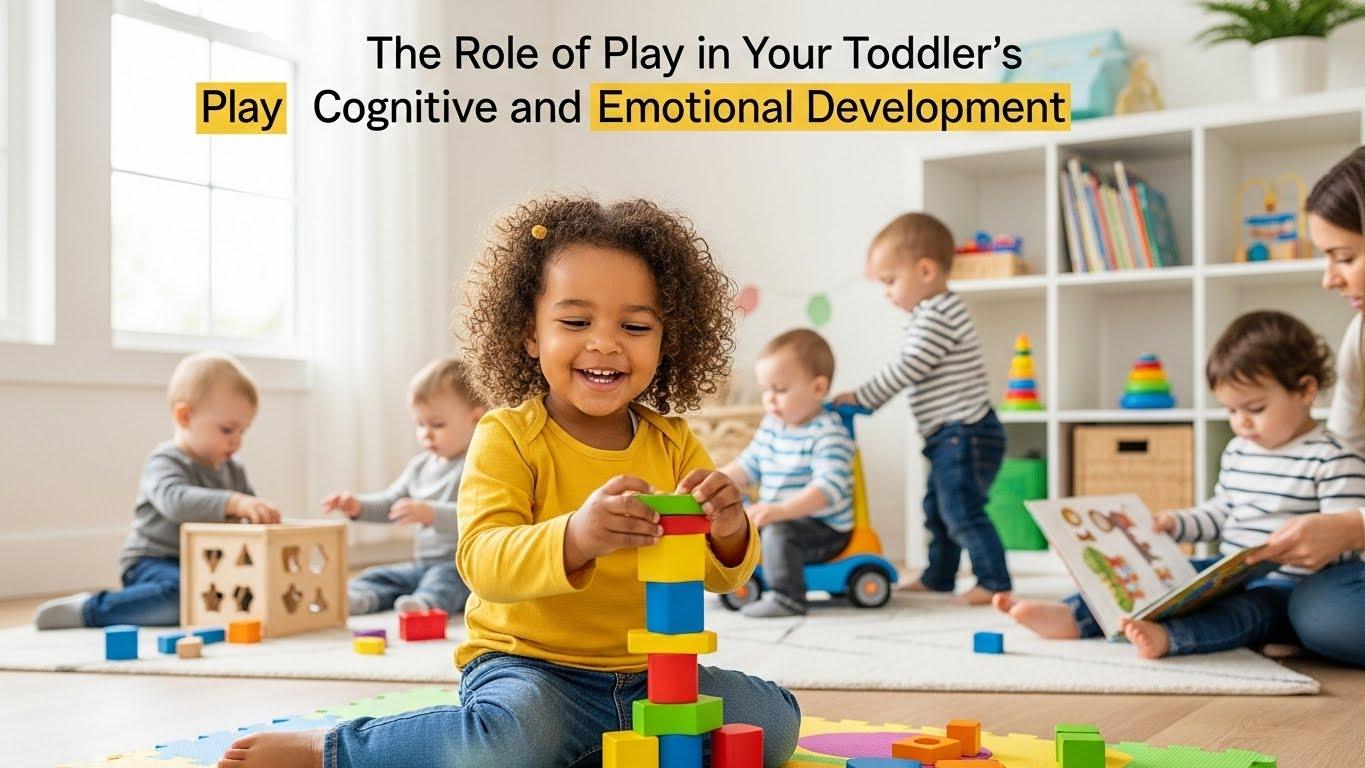
The Role of Play in Your Toddler’s Cognitive and Emotional Development
As a parent or caregiver, you may have noticed how natural it is for toddlers to engage in play. What might seem like simple fun is, in fact, a crucial part of their cognitive and emotional development. In this blog post, we will explore the significant impact of play on toddlers, delving into how it supports brain development, emotional intelligence, social skills, and problem-solving abilities. Understanding these elements will help you foster an environment where play is not just a pastime but a vital developmental tool.
Understanding the Cognitive Benefits of Play
Play is more than a mere diversion for toddlers; it’s a fundamental component of their cognitive growth. During play, toddlers engage in activities that promote learning and understanding of the world around them. Through play, children develop essential cognitive skills such as memory, concentration, and problem-solving.
One of the primary ways play aids cognitive development is through language acquisition. When toddlers engage in pretend play or interact with toys and other children, they often use language to express themselves, describe actions, and communicate ideas. This interaction enhances vocabulary, improves sentence structure, and strengthens the ability to understand complex concepts.
Moreover, play encourages critical thinking and creativity. When toddlers build block towers or solve simple puzzles, they learn cause-and-effect relationships, spatial awareness, and how to think ahead. These activities help develop executive function skills, which are vital for planning, decision-making, and attention control.

Emotional Development through Play
Play is equally essential for emotional development in toddlers. During play, children have the opportunity to explore different emotions and learn how to manage them. This is especially true in pretend play, where toddlers often take on various roles and scenarios that allow them to express and identify emotions in a safe environment.
For instance, when a toddler plays house and pretends to be a parent, they begin to understand empathy by caring for their “children” or stuffed animals. This type of play helps children recognize and respond to the emotions of others, fostering empathy and compassion.
Additionally, play provides a platform for toddlers to learn about self-regulation. Through games and structured activities, children practice patience, take turns, and develop impulse control. These experiences are foundational for emotional intelligence, allowing toddlers to navigate social situations more effectively as they grow.
The Social Dynamics of Play
Social skills are crucial for a child’s overall development, and play is one of the primary means through which toddlers learn to interact with others. Group play, whether in daycare settings or at home with siblings, teaches children essential social skills such as sharing, cooperation, and negotiation.
During group activities, toddlers learn to communicate and collaborate, building the foundation for teamwork and leadership. They also encounter conflicts, which serve as valuable lessons in problem-solving and understanding different perspectives. By navigating these social dynamics, children learn the importance of boundaries, respect, and the give-and-take of healthy relationships.
Furthermore, playgroups and playdates provide toddlers with opportunities to observe and imitate peers, which can enhance learning and reinforce positive behaviors. As children model each other, they often pick up new skills and ideas, further enriching their social development.
Fostering Problem-Solving Skills through Play
Problem-solving is a critical skill that toddlers begin to develop through play. Whether they are building a tower, completing a puzzle, or figuring out how to operate a new toy, these activities require children to think critically and find solutions to challenges.
Open-ended play, such as using building blocks or art supplies, encourages children to experiment and explore different possibilities. This type of play promotes innovation and adaptability, allowing toddlers to approach problems creatively and with confidence.
Moreover, play often involves trial and error, which teaches perseverance and resilience. When a toddler’s block tower collapses, they learn to try again, refining their strategies and understanding that failure is a part of the learning process. These experiences build a strong foundation for problem-solving that will benefit them throughout their lives.
How Parents and Caregivers Can Support Play
To maximize the benefits of play, parents and caregivers should create an environment that encourages exploration and creativity. Here are some strategies to support your toddler’s playtime:
- Provide a variety of toys and materials: Offer a range of age-appropriate toys that stimulate different types of play, from building blocks to art supplies and musical instruments.
- Encourage unstructured play: Allow your toddler the freedom to explore and create their own games and activities without rigid rules or guidelines.
- Engage in play with your child: Spend time playing with your toddler, following their lead and showing interest in their activities. This not only strengthens your bond but also provides opportunities for learning and development.
- Create a safe and inviting play space: Designate a specific area for play that is safe, comfortable, and filled with stimulating materials.
- Promote outdoor play: Encourage outdoor activities that allow your toddler to explore nature, develop physical skills, and engage in imaginative play.
Takeaways
Play is an integral part of a toddler’s cognitive and emotional development. Through various forms of play, children enhance their language skills, emotional intelligence, social interactions, and problem-solving abilities. As parents and caregivers, understanding the importance of play and actively supporting it can greatly influence your child’s growth and learning. By providing a nurturing and stimulating environment, you can help your toddler reach their full potential and prepare them for the challenges of the future.
Remember, the next time you see your toddler engrossed in play, they are not just having fun—they are building the foundation for a lifetime of learning and development.
Incorporating Play into Daily Routines
Incorporating play into everyday routines can further enhance your toddler’s development. Here are practical ways to do so:
- Playful learning during meals: Use mealtime as an opportunity to engage in playful activities. You can count pieces of fruit, talk about colors and shapes, or create stories about the food on their plate. These activities not only make mealtime enjoyable but also support cognitive development.
- Bath time fun: Transform bath time into a playful experience with water toys, bubbles, and games. This can help toddlers develop their fine motor skills and sensory understanding while making the routine more enjoyable.
- Turn chores into games: Involve your toddler in household chores by turning them into playful activities. For example, sorting laundry by colors or matching socks can become a fun game that also teaches them about organization and responsibility.
- Storytime adventures: Encourage your child to participate in storytelling by asking them to predict what happens next or to create alternate endings. This stimulates their imagination and enhances their narrative skills.
- Walking and exploring: Make walks more engaging by playing games like “I Spy” or by collecting natural items like leaves and stones. This not only supports physical activity but also encourages curiosity and observation.
Supporting Play with Technology
In today’s digital age, technology can also play a role in your toddler’s development if used wisely. Interactive educational apps and games designed for toddlers can complement traditional play methods. However, it’s essential to maintain a balance and ensure that screen time is limited and age-appropriate.
Pediatric guidelines suggest that for children aged 2 to 5 years, screen time should be limited to one hour per day of high-quality programming. During this time, parents should co-view, to help children understand what they are seeing and apply it to the world around them.
Interactive apps that promote drawing, music creation, and problem-solving can be beneficial. These apps should encourage active engagement and creativity rather than passive consumption. When used correctly, technology can enhance learning and offer new ways for toddlers to engage with educational content.
The Role of Play in Cultural and Community Contexts
Play is also influenced by cultural and community contexts, which can shape the types of play activities that are prevalent. In many cultures, traditional games and storytelling are integral to play, passing down cultural values and history through generations.
Community playgroups and events provide opportunities for children to engage with peers from diverse backgrounds, fostering inclusivity and broadening their social perspectives. Participating in cultural festivals, community fairs, and local library story hours can expose toddlers to different traditions and ways of life, enhancing their social and cultural understanding.
Parents and caregivers can enrich their child’s play experiences by incorporating cultural elements into playtime. This might involve teaching songs, dances, or crafts from your cultural heritage or exploring those from other cultures. Such activities can promote a sense of identity and appreciation for diversity.
Final Thoughts on Play and Development
In conclusion, play is a multifaceted tool that significantly contributes to a toddler’s cognitive and emotional development. By understanding the various benefits of play and actively incorporating it into your child’s daily life, you can support their growth in a holistic manner.
Remember that play is not just a child’s activity; it’s a vital part of their learning journey. By fostering an environment that values play, you encourage creativity, curiosity, and resilience in your toddler. These qualities will serve them well as they navigate the complexities of life, ensuring they grow into well-rounded individuals.
As you continue to engage your toddler in playful activities, keep in mind that your involvement and enthusiasm are key. Your support and encouragement make a world of difference in how your child experiences and benefits from play. Embrace the joy of play and watch as your toddler flourishes in every aspect of their development.
Posts relacionados

Dia Internacional da Tolerância Zero à Mutilação Genital Feminina
Acabar com a mutilação genital feminina até 2030 A mutilação genital feminina (MGF) compreende todos os procedimentos que envolvem a alteração ou...

Protegendo mães e bebês contra o HIV e a sífilis: preço do teste duplo cai para US$ 0,84.
Como uma parceria inédita aumentou o acesso ao teste de sífilis para milhões de mulheres, ao mesmo tempo que economizou milhões para...

Novo relatório: O custo da inação em relação ao HIV para as crianças
O futuro deles está em jogo. Este relatório, produzido pela UNAIDS, UNICEF e Avenir Health, mostra que o progresso significativo alcançado nas...
Brasil – Programa Criança Feliz
Todos os anos, a Cúpula Mundial de Inovação para a Educação (WISE) premia projetos inovadores que abordam desafios educacionais globais. Este ano,...

Uprooted: Three displaced survivors of gender-based violence share their personal journeys
Aisha* was 16 years old when she found herself alone, in the middle of war. She had been living with her mother...
Leia tudo
“Transitioning from Infant to Toddler: What to Expect and How to Manage”
Transitioning from Infant to Toddler: What to Expect and How to Manage The transition from infancy to toddlerhood is a momentous phase...
Leia tudo