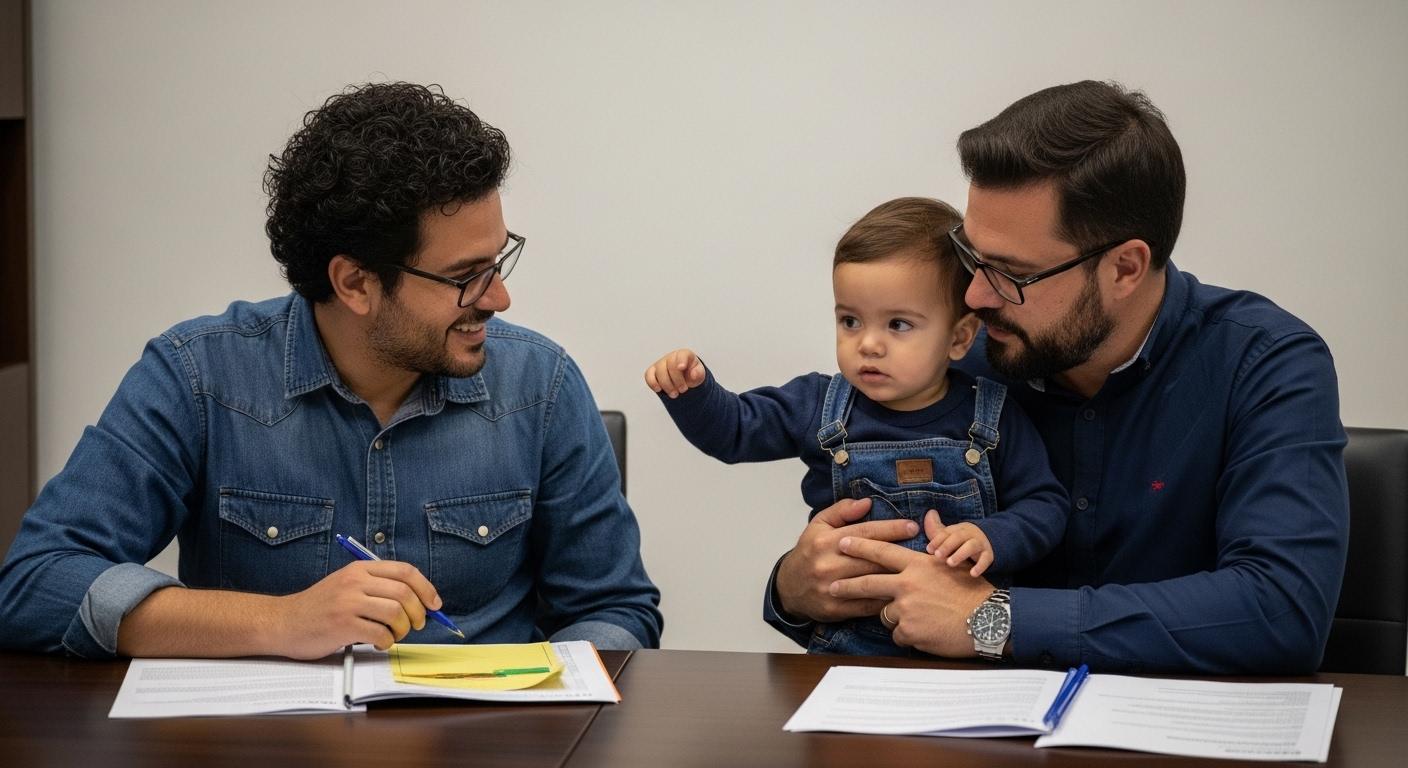
Across Brazil, parenting unfolds under shifting conditions. This analysis of brazil Parenting Brazil examines how climate disruption, urban migration, and evolving family structures influence daily routines, safety, and long-term development for children. Families now negotiate school cancellations, shifting work patterns, and the emotional toll of uncertainty, all while trying to foster curiosity, responsibility, and hope in the next generation.
Context and stakes for Brazilian families
Brazilian households live at the intersection of environmental risk and rapid social change. Floods, heat waves, and unpredictable rainfall reshape where families can live, commute, and access essential services. When neighborhoods flood, parents juggle immediate safety with longer-term needs like schooling, healthcare, and stable routines. The causal links are clear: climate shocks strain local infrastructure, which in turn increases parental stress, shortens bandwidth for responsive parenting, and amplifies disparities between urban and rural communities. In this context, brazil Parenting Brazil becomes a lens through which to understand not only daily care, but the kind of society that supports every child’s growth.
Life at home: education, care, and digital life
Education has become a central battleground for families. When schools close temporarily or shift to hybrid formats, children rely on parents to mediate learning, monitor screen time, and maintain motivation. The digital divide matters more than ever: households with reliable internet and devices can sustain remote lessons, while others face gaps that widen achievement gaps. In many homes, caregiving responsibilities fall along traditional lines, with mothers often bearing a disproportionate share of planning, logistics, and informal tutoring. Yet there is evidence of adaptive patterns: extended family networks, community volunteers, and local schools stepping in to fill the gaps through flexible schedules, printed materials, and neighborhood study groups. The net effect is a reconfiguration of daily routines, where learning becomes a shared, scaled effort rather than a single household obligation.
Policy, community, and market responses
Public policy and civil society are increasingly intertwined with family life. Emergency relief programs, school meal contingencies, and mobile health services help stabilize households during crises, while community centers offer safe spaces for children and parents to decompress, learn, and connect. Private sector actors—tech companies, publishers, and ed-tech startups—are responding with tools designed to support caregivers, from offline learning kits to parent-facing dashboards that track student progress. The overall arc is pragmatic: policies aim to cushion the impact of disruptions, while communities experiment with local solutions that respect cultural norms and the diversity of Brazilian households. This ecosystem matters because resilient parenting depends not just on individual choices, but on the social infrastructure that backs those choices when times get rough.
Actionable Takeaways
- Establish flexible family routines that can adapt to interruptions in schooling, work, and transport while preserving essential sleep, meals, and outdoor time for health.
- Build local support networks—neighbors, extended family, and community groups—to share information, childcare, and practical aid during emergencies.
- Develop a simple family emergency plan that includes safe meeting points, contact lists, and a basic every-day carry kit with essentials for children.
- Prioritize digital literacy and safe internet use, ensuring children can access quality learning resources while parents stay informed about online safety.
- Create open, age-appropriate conversations about climate risks, uncertainty, and resilience to normalize discussing emotions and coping strategies with kids.
- Advocate for schools and local authorities to provide consistent guidance during disruptions, including clear communication channels and accessible mental health support.
Source Context
From an editorial perspective, separate confirmed facts from early speculation and revisit assumptions as new verified information appears.
Track official statements, compare independent outlets, and focus on what is confirmed versus what remains under investigation.
For practical decisions, evaluate near-term risk, likely scenarios, and timing before reacting to fast-moving headlines.
Use source quality checks: publication reputation, named attribution, publication time, and consistency across multiple reports.
Cross-check key numbers, proper names, and dates before drawing conclusions; early reporting can shift as agencies, teams, or companies release fuller context.
When claims rely on anonymous sourcing, treat them as provisional signals and wait for corroboration from official records or multiple independent outlets.
Posts relacionados

Hidden Parenting Brazil: Unseen Pressures on Brazilian Families
An in-depth look at hidden Parenting Brazil, tracing how economic strain, work culture, and social expectations shape co-parenting and child-rearing in.
Hidden Parenting Brazil: A Deep Analysis of Quiet Families
hidden Parenting Brazil: An in-depth, data-driven examination of how Brazilian families navigate care, work, and social norms, revealing the unseen forces.
Leia tudo
one Parenting Brazil: Parenting Brazil: Navigating Co-Parenting in M
one Parenting Brazil: An in-depth, context-rich analysis of how Brazilian families negotiate shared parenting amid work demands, cultural expectations, and.
Leia tudo
one Parenting Brazil: Fatherhood in Brazil: A Deep Analysis for Pare
one Parenting Brazil: This analysis examines how Brazilian families navigate fatherhood, workplace demands, and shared parenting in a changing social.

one Parenting Brazil: Brazilian Parenting Frontiers: Co-Parenting, P
This analysis explores how Brazilian families navigate co-parenting, work-life balance, and community supports. It frames practical steps within one.
Leia tudo
one Parenting Brazil: Brazilian Parenting in Focus: Deep Analysis of
one Parenting Brazil: An in-depth, practice-oriented look at how Brazilian families navigate work, care, and culture, offering actionable insights for.
Leia tudo