
amelia Parenting Brazil offers a lens to examine how Brazilian families navigate child-rearing, custody decisions, and shared responsibilities in contemporary households. This analysis explores the forces shaping co-parenting dynamics, from policy frameworks to workplace culture, and what families can expect as they navigate these transitions in daily life and over the long arc of childhood. The aim is not to prescribe a single model of parenting, but to illuminate pathways that make care more predictable, fair, and supportive across diverse Brazilian contexts.
The Landscape of Paternity and Parenting in Brazil
In Brazil, family life is shaped by regional differences and strong extended kin networks. In urban households, both parents often work, yet childcare access is uneven: high-quality centers exist in wealthier areas, while rural and low-income zones rely on relatives or informal care. Mothers continue to shoulder a large share of caregiving tasks, which has implications for time, energy, and the ability to participate in the labor market. Fathers’ involvement is increasingly visible, but it is often constrained by work demands and cultural expectations that still prize breadwinning as primary. The outcome for children depends on routine stability, supportive adults, and access to health and education services. When families can align schedules, share bedtime rituals, and coordinate school pick-ups, children show steadier emotional development and better learning engagement; when those pieces fall apart, stress and conflicts surge, trickling into behavior and school performance.
From Policy to Practice: How Families Navigate Co-Parenting
Brazilian law frames parental rights and responsibilities within the Estatuto da Criança e Adolescente and related labor regulations, but enforcement and access vary by income and geography. Paternity leave, flexible work arrangements, and guardianship processes can support shared parenting, yet navigating forms, waiting times, and court procedures remains challenging for many families. In practice, many parents reach co-parenting arrangements through mediation, app-based scheduling tools, or community organizations that help translate policy into predictable routines. The causal link is clear: consistent parental involvement, regardless of the household structure, correlates with better attachment security and social competence in early childhood. Employers that offer predictable shifts, remote-work options, and formal parental leave tend to reduce conflicts at home and improve retention among caregivers, especially men returning to work after the birth of a child. In rural areas, extended family and neighbors often fill gaps; in cities, formal childcare and school calendars shape daily rhythms, sometimes creating parallel demands that require careful negotiation between co-parents.
Media Narratives and Public Perception: Impact on Families
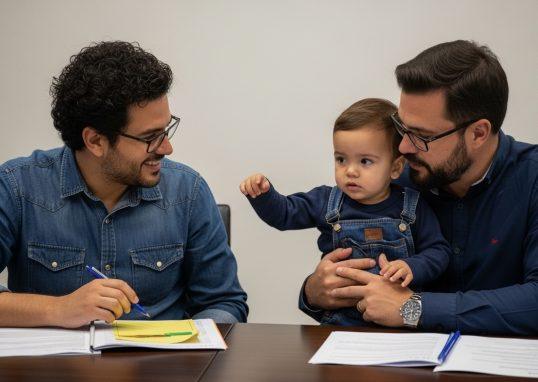
Public discourse around parenting in Brazil—ranging from policy debates to viral social media moments—colors how families plan for care, discipline, and shared decision-making. When stories emphasize custody feuds or celebrity lifestyles, they can distort expectations and spur unnecessary anxiety about what constitutes a “good” co-parenting arrangement. Conversely, responsible reporting that highlights practical strategies—coordinated calendars, shared decision-making, and community supports—can empower families to pursue collaboration even in the face of work pressures and financial strain. This dynamic is especially relevant in Brazilian contexts where extended kin—grandparents, aunts, and cousins—often participate in daily caregiving. The article explores scenarios: a two-income household aligning school routines; a father carving out regular weekend and midday moments with a toddler; a non-biological parent negotiating a legal path to guardianship within a blended family. The takeaway is not sensationalism, but the insight that public narratives can either widen or shrink the space for constructive parenting choices.
Practical Pathways for Parents: Tools and Supports
Turning analysis into action means building practical systems that protect children’s routines while supporting caregiver well-being. A formal parenting plan—documenting shared responsibilities, decision rights, and contingency options—reduces ambiguity and conflict. Tools such as shared calendars, clear communication channels, and regular check-ins help synchronise schedules across households or households-within-blends. Healthcare providers, schools, and community organizations play a crucial role in connecting families to affordable childcare, parental education, and legal guidance. Employers have a significant influence when they implement family-friendly policies: predictable hours, paid parental leave, childcare subsidies, and flexible work arrangements that respect caregiving duties. Scenario-based advice follows: set a weekly routine with explicit times for meals, school meetings, and bedtime; establish a neutral communication method with co-parents; prepare a plan for school holidays and caregiver swaps; engage extended family in constructive roles that support routines rather than introduce conflicting demands. The result is a more resilient family system that can weather economic or personal shocks with less disruption to children.
Actionable Takeaways
- Draft a written parenting plan that outlines shared duties, decision-making, and conflict-resolution steps.
- Use predictable scheduling tools and keep a common calendar for school events, medical appointments, and routines.
- Investigate local mediation services or family-support programs to help align expectations and responsibilities.
- Encourage workplaces to adopt family-friendly policies, including flexible hours and targeted parental leave.
- Engage extended family in constructive roles that support routines rather than introduce conflicting demands.
Source Context
Posts relacionados

Hidden Parenting Brazil: Unseen Pressures on Brazilian Families
An in-depth look at hidden Parenting Brazil, tracing how economic strain, work culture, and social expectations shape co-parenting and child-rearing in.
Hidden Parenting Brazil: A Deep Analysis of Quiet Families
hidden Parenting Brazil: An in-depth, data-driven examination of how Brazilian families navigate care, work, and social norms, revealing the unseen forces.
Leia tudo
one Parenting Brazil: Parenting Brazil: Navigating Co-Parenting in M
one Parenting Brazil: An in-depth, context-rich analysis of how Brazilian families negotiate shared parenting amid work demands, cultural expectations, and.
Leia tudo
one Parenting Brazil: Fatherhood in Brazil: A Deep Analysis for Pare
one Parenting Brazil: This analysis examines how Brazilian families navigate fatherhood, workplace demands, and shared parenting in a changing social.

one Parenting Brazil: Brazilian Parenting Frontiers: Co-Parenting, P
This analysis explores how Brazilian families navigate co-parenting, work-life balance, and community supports. It frames practical steps within one.
Leia tudo
one Parenting Brazil: Brazilian Parenting in Focus: Deep Analysis of
one Parenting Brazil: An in-depth, practice-oriented look at how Brazilian families navigate work, care, and culture, offering actionable insights for.
Leia tudo